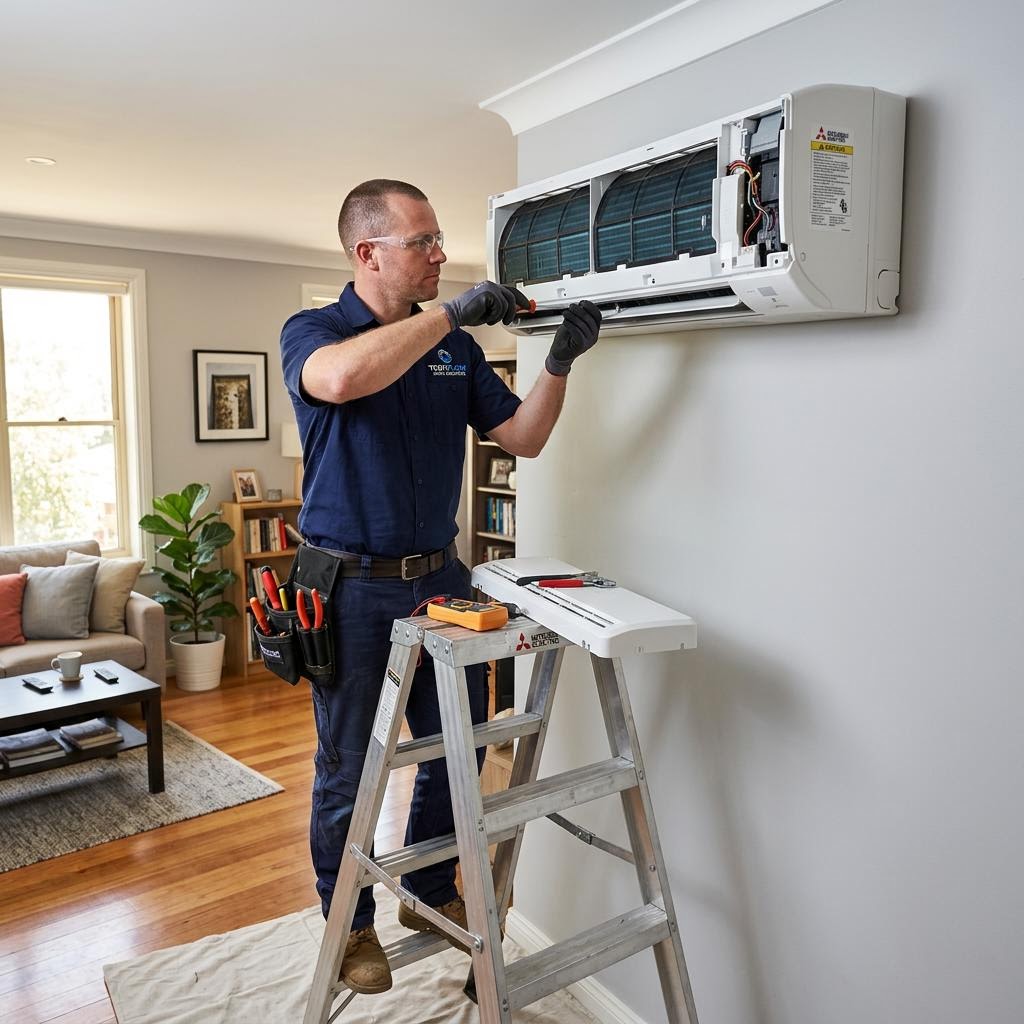
Room area is only part of air conditioner sizing. Learn what to measure and how sun, insulation, ceiling height and room use affect the choice.
Two rooms with the same floor area can need different air conditioning capacity. A shaded bedroom and a west-facing living area with large windows do not gain heat in the same way. Online room-size charts can start a conversation, but they do not replace an assessment of the actual space.
Measure the space you intend to condition
Record length, width and ceiling height, then sketch openings to adjacent rooms. Be clear whether you want to condition one enclosed room or an open-plan area. A unit in a hallway should not be assumed to distribute air evenly to bedrooms behind closed doors.
Note where people sit or sleep and where an indoor unit might fit. Airflow paths, furniture and door positions affect comfort as well as the total load. If your main aim is overnight bedroom comfort, explain that rather than asking only for the biggest unit that fits.
Show the installer what adds heat or loses it
Sun exposure, glazing, shading, insulation and air leakage can all affect the assessment. Sydney homes vary from older terraces to newer apartments, so a recommendation based on another property may not transfer.
- Window sizes, orientation and existing curtains or external shade.
- Ceiling insulation and any known draughts or open stairwells.
- Normal occupancy and heat-producing equipment.
- Whether heating performance matters as much as summer cooling.
Why bigger is not automatically better
An undersized system may struggle under the conditions it was meant to serve. An oversized choice is not a substitute for good design either: operating behaviour, airflow, noise and control range still need consideration. Compare performance information for the specific models rather than relying on size alone.
Check whether a capacity figure refers to cooling or heating and distinguish that output from electrical input. Ask the installer to explain the assumptions behind the recommendation, including whether shading or insulation improvements could change the required capacity.
Include installation constraints in the decision
A split-system air conditioning assessment should consider indoor placement, the outdoor unit, drainage, electrical supply and service access alongside capacity. A suitable model can still be a poor fit if these are overlooked.
For an apartment, confirm strata requirements and practical access before purchasing. Discuss where condensate will drain and how sound may affect your household or neighbours. Ask for the selected model and included installation scope in writing. The goal is dependable comfort in the intended room, not a universal kilowatt recommendation based only on floor area.