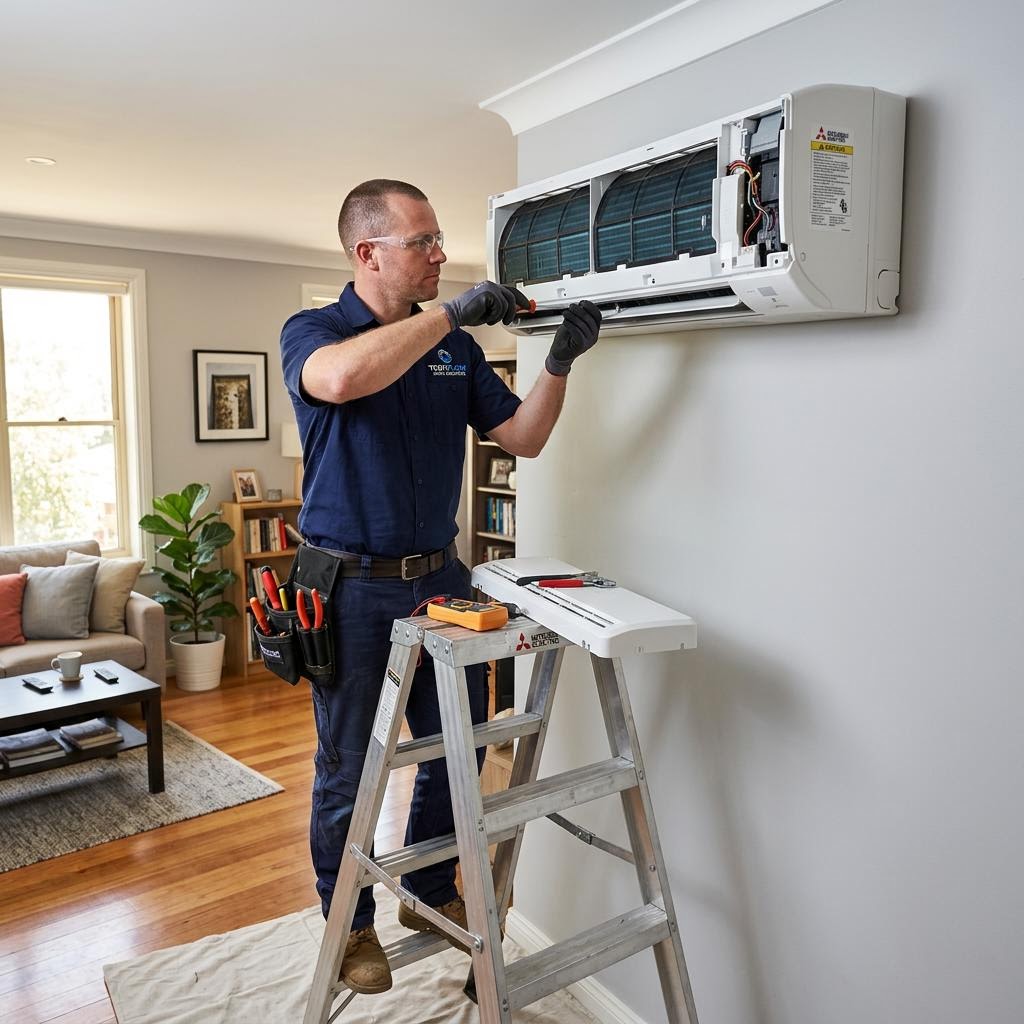
Indoor air conditioner leaks need attention. Understand possible causes, what to note safely and why a technician should inspect drainage and operation.
An air conditioner can produce condensate during cooling, but that water should follow the intended drainage path rather than drip down your wall. An indoor leak can involve drainage, airflow, icing or installation conditions. The visible drip location does not reliably identify which part needs attention.
Stop operation and protect the area safely
Stop using the unit via its normal control if you can do so safely. Keep away from wet electrical fittings and do not touch a damp unit, plug or switch. If there is an electrical hazard or immediate danger, keep people clear and seek urgent help.
Move belongings from below the leak only if access is safe. Do not climb onto furniture, remove covers, push tools into a drain or keep running the unit to watch where water goes. Avoid attempting refrigerant work or trying to thaw ice with heat. Renters should notify the property manager promptly.
Possible causes a technician will assess
A restricted or poorly routed condensate drain can prevent water leaving the unit as intended. A damaged tray, connection issue or a condensate pump problem, where one is fitted, can also require investigation.
Restricted airflow or an operating fault may allow ice to develop and later melt. Refrigerant-related faults are one possibility, but a leak of water is not proof the system needs a refrigerant top-up. Adding refrigerant without diagnosis does not resolve a blocked drain or incorrect drainage arrangement.
Record the timing rather than opening the unit
Useful observations help narrow the investigation without exposing you to internal parts. A photograph from floor level and a short account of normal use are usually more helpful than a guess about the fault.
- Was the system cooling, heating or recently switched off?
- Did the leak begin after installation, servicing or a long period of use?
- Was airflow weaker than normal or was ice visible without opening anything?
- Is water coming from the unit, the pipe cover or another part of the wall?
What to ask after the inspection
Use air conditioning repair and maintenance services to assess drainage and the unit’s operation. Tell the technician about any previous leak, recent work or damage to the wall.
Ask what caused the water to escape, what has been checked and whether a further visit or repair is required. Confirm when the unit can be used again and how the drainage has been tested. If the wall or ceiling remains damp, arrange assessment of the affected materials rather than assuming stopping the drip has completed the recovery. Keep a record if the issue recurs.