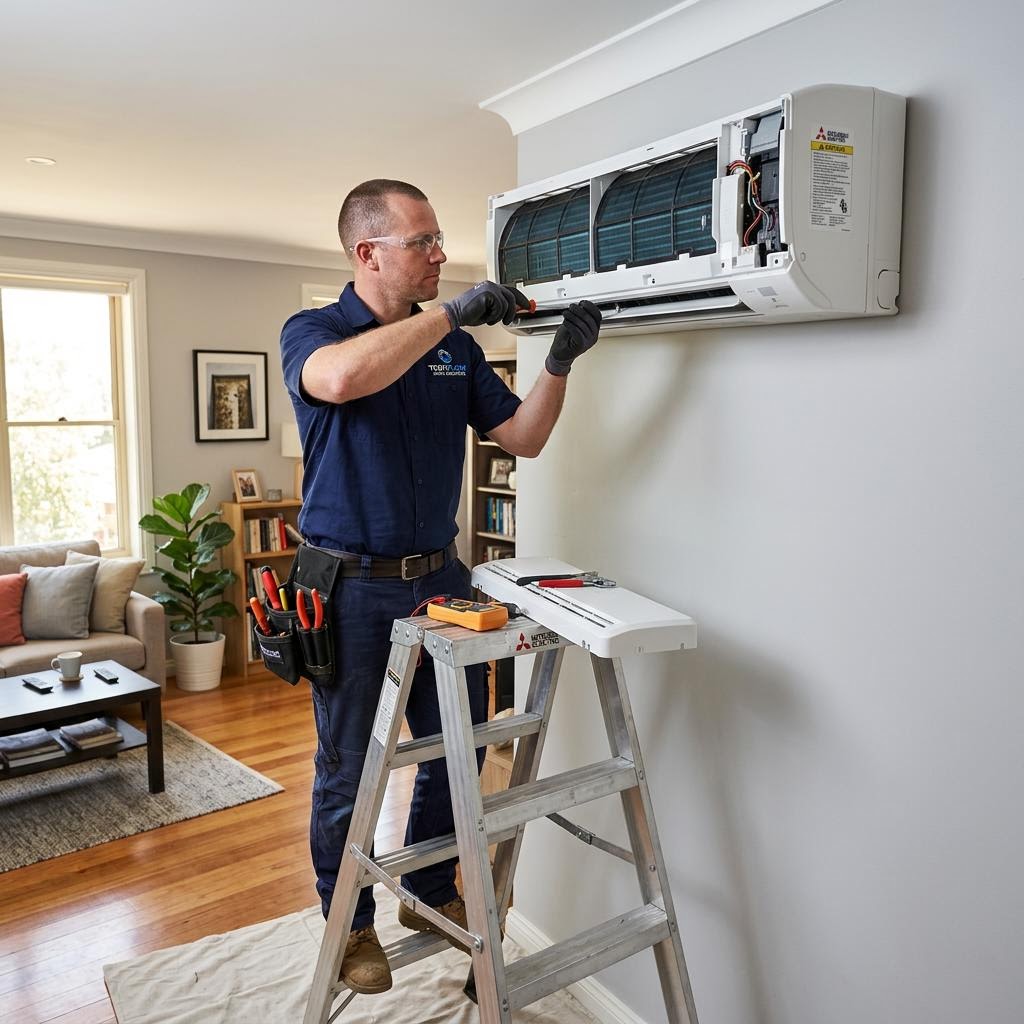
Choose a bathroom exhaust fan using the room, duct route, replacement air and controls. Discuss noise and service access before selecting a model.
An exhaust fan should remove moisture-laden air through a suitable path, not merely make a noise above the shower. The room size, duct route, outdoor discharge and incoming replacement air all affect performance. A bigger advertised airflow figure does not automatically produce a better installation. Ask the installer to assess the complete arrangement before choosing a replacement from its faceplate size.
Describe moisture and room use
Explain whether condensation appears during showers, remains afterwards or occurs even when the bathroom is unused. Note existing leaks or persistent dampness separately. The fan may be one part of the response, not a cure for failed waterproofing or water entry. Tell the installer how many people use the room and whether windows can normally be opened. These observations are more useful than choosing by bathroom floor area alone.
Ask where the air goes
The proposed extraction route needs checking from the fan to the appropriate discharge location. Duct length, bends and the selected equipment can affect the result. Do not assume a ceiling opening or an existing grille proves the route is suitable. Ask how replacement air reaches the bathroom when the door is closed. Leave inspection of roof spaces, penetrations and electrical work to professionals rather than exploring the route yourself.
Compare noise in context
A product’s sound information is useful, but mounting and duct conditions also matter. Explain whether the bathroom adjoins a bedroom or is used late at night. Ask whether the proposed layout limits vibration and whether controls are easy to use. The quietest showroom sample may not be the best choice if it cannot serve the required route. Compare suitable models after the installation constraints are understood.
Choose controls people will use
Discuss a separate switch, light-linked operation, timer or other supported controls. Ask how the fan will continue clearing moisture after use if that is part of the plan, and how occupants override it where appropriate. Connected features should not make ordinary use difficult for guests. A licensed electrician must assess wiring and permitted equipment locations; do not replace a fixed fan or relocate a switch as a household DIY task.
Keep maintenance accessible
Ask how accessible surfaces are cleaned safely under the model instructions and which servicing requires a professional. Retain the model details and installation scope. If dampness persists after the agreed work, report it with timing and location information rather than assuming another, larger fan is the answer. A useful selection balances extraction, replacement air, noise and access as one system.
For a property-specific discussion, contact our bathroom exhaust fans team with the details you have gathered.