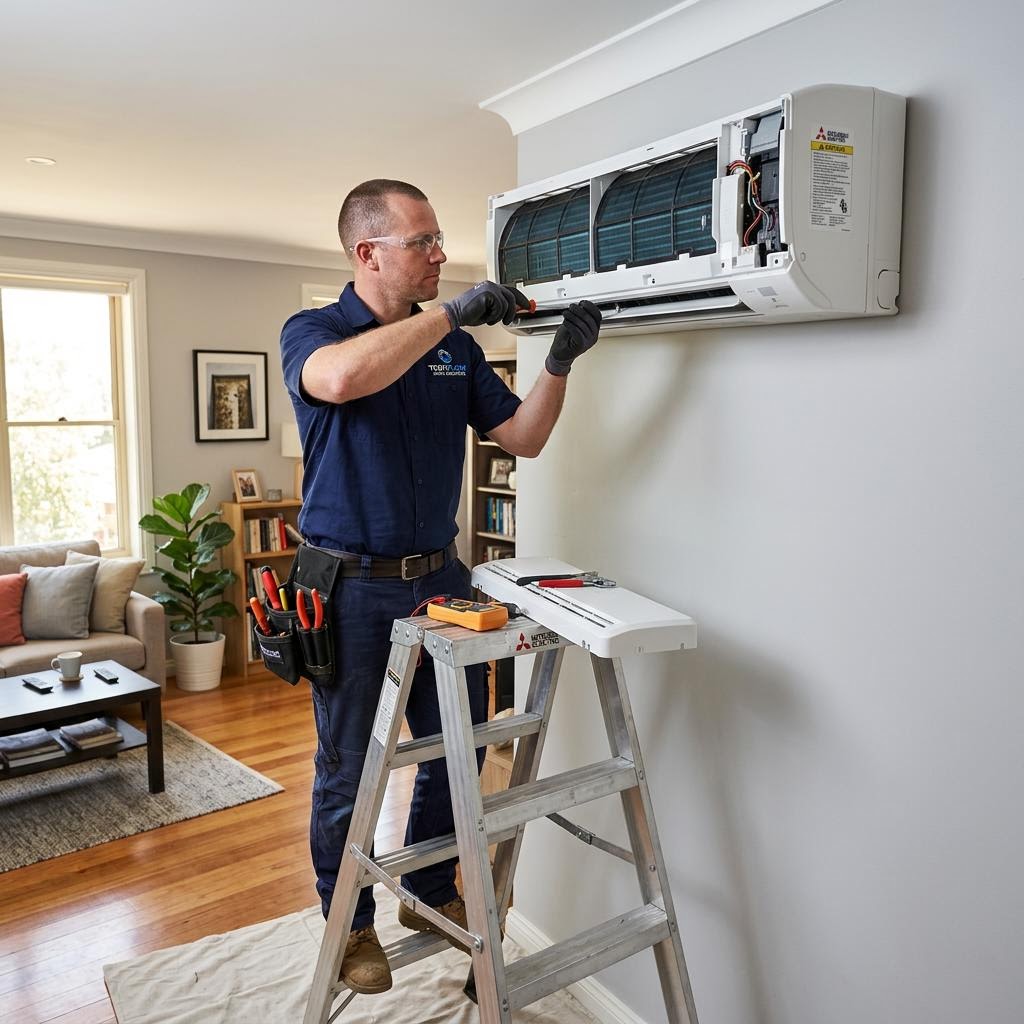
Record unusual air conditioner sounds, timing and operating mode safely. Prepare a useful repair brief without opening covers or reproducing a fault.
Air conditioners make operating sounds, but a new rattle, repeated knock or change in vibration deserves context. A recording can help describe the symptom, yet it cannot establish which internal part is responsible. Observe from a safe position during ordinary use and arrange assessment when the sound is new, persistent or accompanied by other concerns. Do not dismantle the unit to investigate.
Identify the location and timing
Say whether the sound appears to come from the indoor unit, outdoor unit or a nearby wall. Note whether it occurs at start-up, during steady operation or after stopping. Include heating or cooling mode and any other visible symptom. A brief recording from normal standing distance can be useful, but do not lean into equipment or go near a dangerous location to get a better sound.
Distinguish vibration from other symptoms
Explain whether nearby surfaces vibrate, a grille rattles or the sound changes with normal fan settings. These observations do not prove a loose component; they help the technician decide what to assess. Report reduced airflow, leaks or error messages separately. If there is a burning smell, smoke, electrical damage or water near wiring, keep clear and seek urgent help rather than continuing operation to collect more evidence.
Provide installation and service history
Tell the team when the noise began and whether installation, cleaning, building work or a storm preceded it. Keep earlier repair invoices and model details available. A recurring sound after a previous repair is useful information, not proof the same part has failed again. In apartments, clarify whether the unit is yours or shared equipment and involve the building manager where access or responsibility is uncertain.
Avoid trial repairs
Do not press on housings, insert objects through grilles, tighten concealed fixings or remove covers. Do not repeatedly cycle the system to reproduce a concerning noise. Ask the service team whether it should remain off pending inspection and follow advice for the actual situation. Normal user maintenance in the manufacturer’s instructions is different from investigating internal moving or electrical parts; uncertainty is a reason to leave it alone.
Ask for a specific finding
After assessment, request the identified cause, completed work and any remaining limitations. Clarify whether the sound is normal for that model or whether further repair is recommended. Ask how normal operation was checked and what to report if the symptom returns. Retain the recording and report together. The useful outcome is an understood operating condition, not an unsupported assurance that every future noise can be ignored.
For a property-specific discussion, contact our split system repairs team with the details you have gathered.