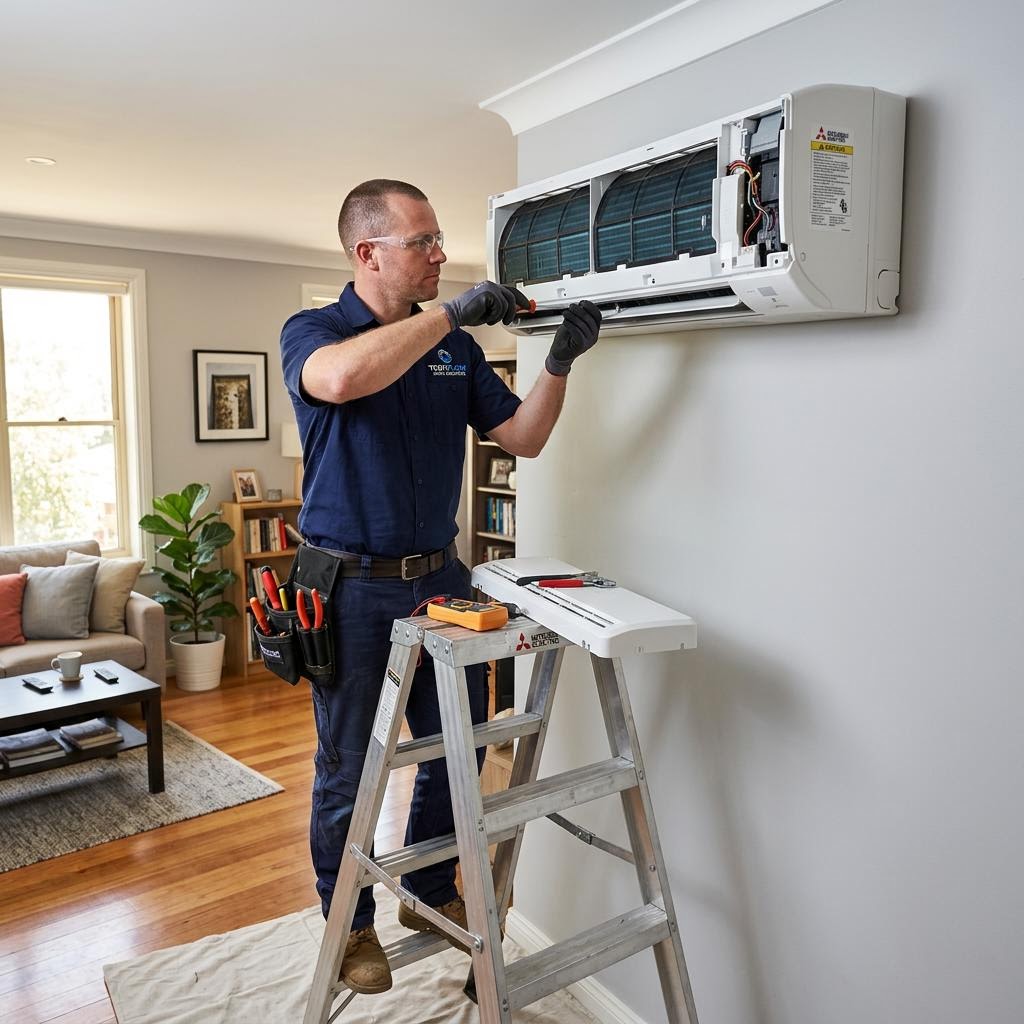
Ask for refrigerant fault diagnosis before an air conditioner recharge. Understand licensing, repair evidence and why weak cooling alone is not proof.
Weak cooling is not proof that an air conditioner needs more refrigerant. Airflow restrictions, controls, equipment faults and other installation conditions can create similar complaints. The advertised recharge service should start with an appropriate assessment, not a routine top-up assumption. Refrigerant handling belongs with a properly licensed technician, and the exact repair process depends on the system and findings.
Describe performance rather than naming a fault
Explain when cooling changed, which rooms are affected and whether airflow or noise also changed. Record any safely visible error message and recent service history. Do not remove covers, connect gauges or attempt a recharge kit. A technician can decide which tests are relevant. If water is leaking indoors, mention that separately; condensate water and a refrigerant leak are different issues even when both need attention.
Check the person and business
The Australian Refrigeration Council’s consumer site provides licence and authorised-business checks. Confirm the relevant licensing for the proposed work rather than relying on a generic service advertisement. Give the team the model and refrigerant information from existing paperwork where available. Do not approach an unsafe outdoor unit or dismantle anything to read a hidden label. Different systems can require different methods and service equipment.
Ask what supports the diagnosis
A useful explanation distinguishes a suspected leak from a confirmed finding and identifies what was tested. Ask whether the cause has been located, whether repair is practical and whether any component replacement needs approval. Adding refrigerant is not itself an explanation for why performance changed. Avoid authorising repeated additions without understanding what the technician found and what remains uncertain. A model-specific assessment is more useful than a standard recharge promise.
Agree the repair and verification scope
Clarify whether the quote includes investigation, repair, required refrigerant work and checking the completed result. Some faults may need parts, further access or a return visit. Ask how the technician will document the work and whether the system should remain unused while awaiting repair. Do not request release of refrigerant or attempt to assist with connections; safe handling and disposal are professional responsibilities.
Retain the result for future servicing
Keep the service report, parts information and operating guidance. Ask which symptoms warrant a call back and whether another issue also affects performance. The source guidance establishes the licensing boundary, not a remote diagnosis or a universal procedure for every refrigerant. An informed customer can ask for evidence and clear scope without trying to supervise technical handling or assuming a recharge guarantees future fault-free operation.
For a property-specific discussion, contact our ac gas recharge team with the details you have gathered.