Understand the stages of a drain camera inspection, how to prepare and which findings to ask your plumber to explain before agreeing to repairs.
A CCTV drain inspection uses a camera inside accessible pipework to help investigate recurring blockages, suspected damage or an uncertain drain condition. It is a diagnostic visit, not automatically a repair. Useful results depend on access, visibility and a plumber interpreting what the camera can actually show.
Before the camera goes into the drain
Explain which fixtures are affected, whether the problem follows rain and what previous clearing or repairs have been attempted. Old plans, reports and footage can help, even if they do not perfectly match the current property.
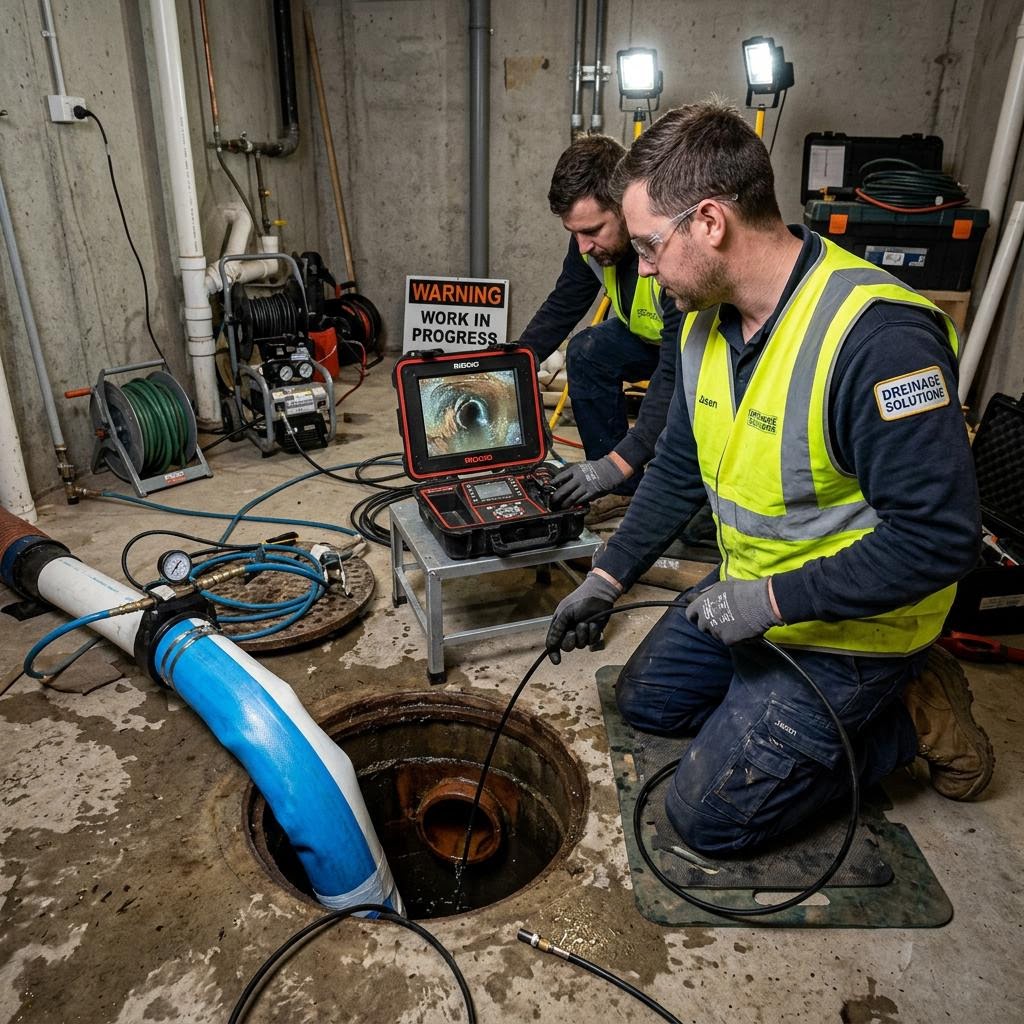
The plumber will consider a suitable access point and whether the drain needs clearing first. A camera may not see beyond a dense blockage or through murky standing water. Ask whether clearing is part of the agreed scope or a separately approved step. Keep children and pets away from the work area and leave drain covers to the plumber.
During the inspection
As the camera travels through the pipe, the plumber looks for visible obstructions, joints, changes in condition and possible defects. Depending on the equipment and access, locating equipment may help relate an observed issue to a position above ground.
A distance shown on screen is not a complete underground survey. Bends, access limitations and pipe layout affect interpretation. If only part of the drain is inspected, the report should make that clear rather than implying the whole system is sound. A camera view also does not replace every other test that a particular problem may require.
Ask for findings you can understand
Footage is most helpful when it is linked to an explanation of the location, observed issue and practical next step. A still image of roots, for example, should come with context about the joint or section involved.
- Which section was inspected, and where did the camera stop?
- Was visibility sufficient to assess the suspected problem?
- Can I receive the recording or relevant images and written findings?
- Is the recommendation clearing, monitoring, further investigation or repair?
Use the result to decide the next step
Discuss drain camera inspections and plumbing advice if blockages keep returning or the cause is unclear. Ask the plumber to separate what was directly observed from what still needs confirming.
The same symptom can have different causes, so avoid choosing a repair method before the inspection is interpreted. If work is proposed, request the affected location, scope, access requirements and any limitations in writing. An inspection that identifies uncertainty honestly is more useful than a confident recommendation that ignores a section the camera could not reach.