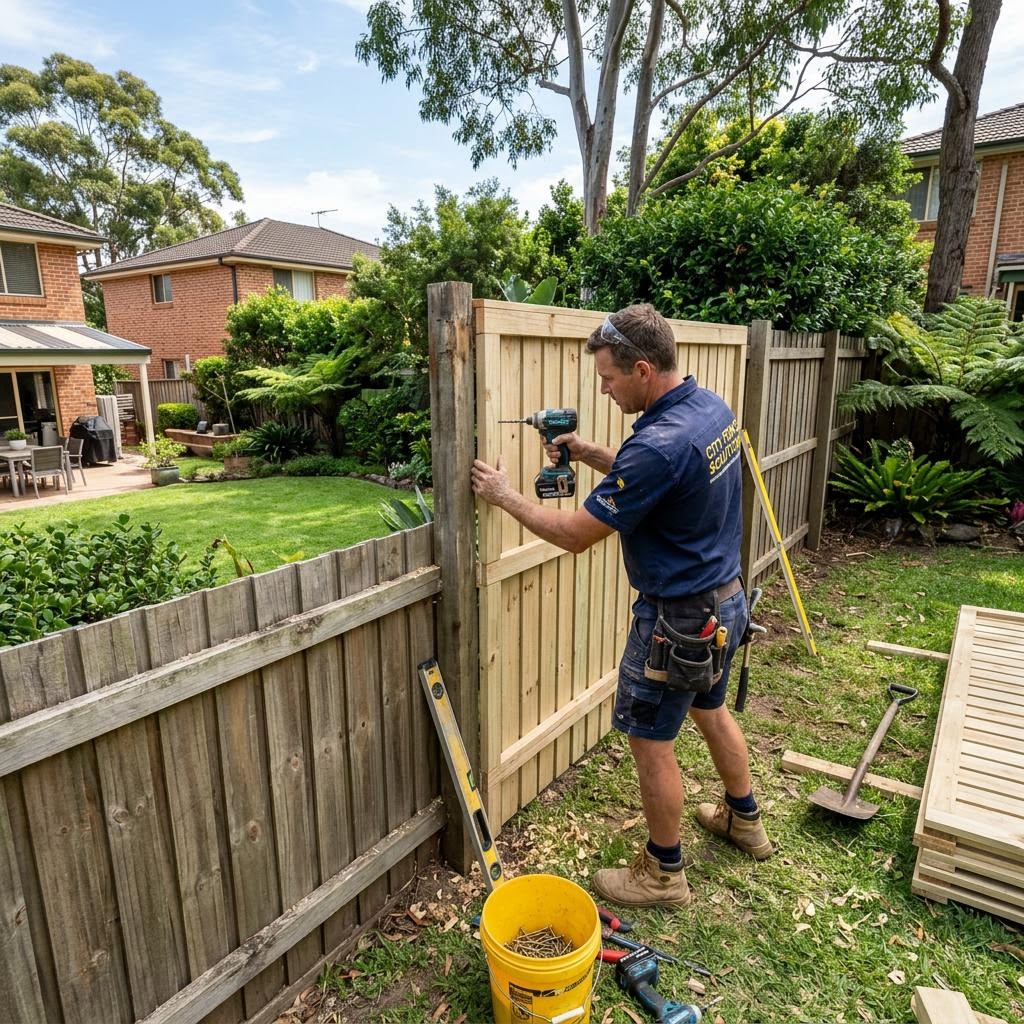
Coordinate retaining walls and fences with clear support, drainage and approval responsibilities. Separate soil retention from a simple boundary-fence replacement.
A fence provides separation, while a retaining wall holds back ground. When they meet, the combined project can involve support, drainage, boundaries and different approval questions. Treating the wall as an ordinary fence footing can leave important issues unresolved. Start with a site assessment and ask which professionals need to coordinate the complete arrangement before either part is priced as a simple replacement.
Describe levels and existing condition
Provide photographs from safe accessible positions showing the wall, fence and ground on each side. Note visible leaning, cracks, drainage symptoms or recent changes. Do not excavate behind the wall or remove supports to investigate. If the wall appears unstable, keep people away and seek prompt professional advice. A photograph can communicate the setting, but cannot establish the condition of foundations or the cause of movement.
Clarify boundaries and responsibility
Gather available survey and ownership records and identify any uncertainty about the line. Existing construction does not automatically settle legal responsibility or contribution between neighbours. Keep agreements and access permissions in writing and seek appropriate advice where disputed. North Sydney Council’s retaining-wall guidance is useful context on function and planning, not a determination for every Sydney property or a substitute for a boundary assessment.
Coordinate support and drainage
Ask who designs or assesses the wall, who confirms how the fence is supported and who addresses drainage. A taller fence or different post arrangement can change the project requirements. Do not attach a new fence to an existing retaining wall on the assumption that it can take the additional demands. The professional team should explain the proposed interface and identify any structural or drainage advice needed.
Check approvals for the actual scope
Fence and retaining-wall rules can involve different conditions. The Planning Portal fence guidance should not be read as blanket permission for the wall below it. Ask the relevant council or qualified adviser which approval pathway applies, considering property constraints and the full work. Clarify who arranges required documents and inspections. A supplier’s standard wall or fence system does not establish that the site qualifies for an exemption.
Compare one coordinated proposal
Request a scope identifying removal, temporary site protection, support, drainage, fence installation and reinstatement. Ask how changes and hidden conditions are approved and who is responsible at each interface. Keep the drawings, findings and handover records together. A coordinated approach may involve several trades, but it avoids pretending soil retention and boundary separation are the same task or that a decorative fence quote covers the complete ground problem.
For a property-specific discussion, contact our retaining walls team with the details you have gathered.