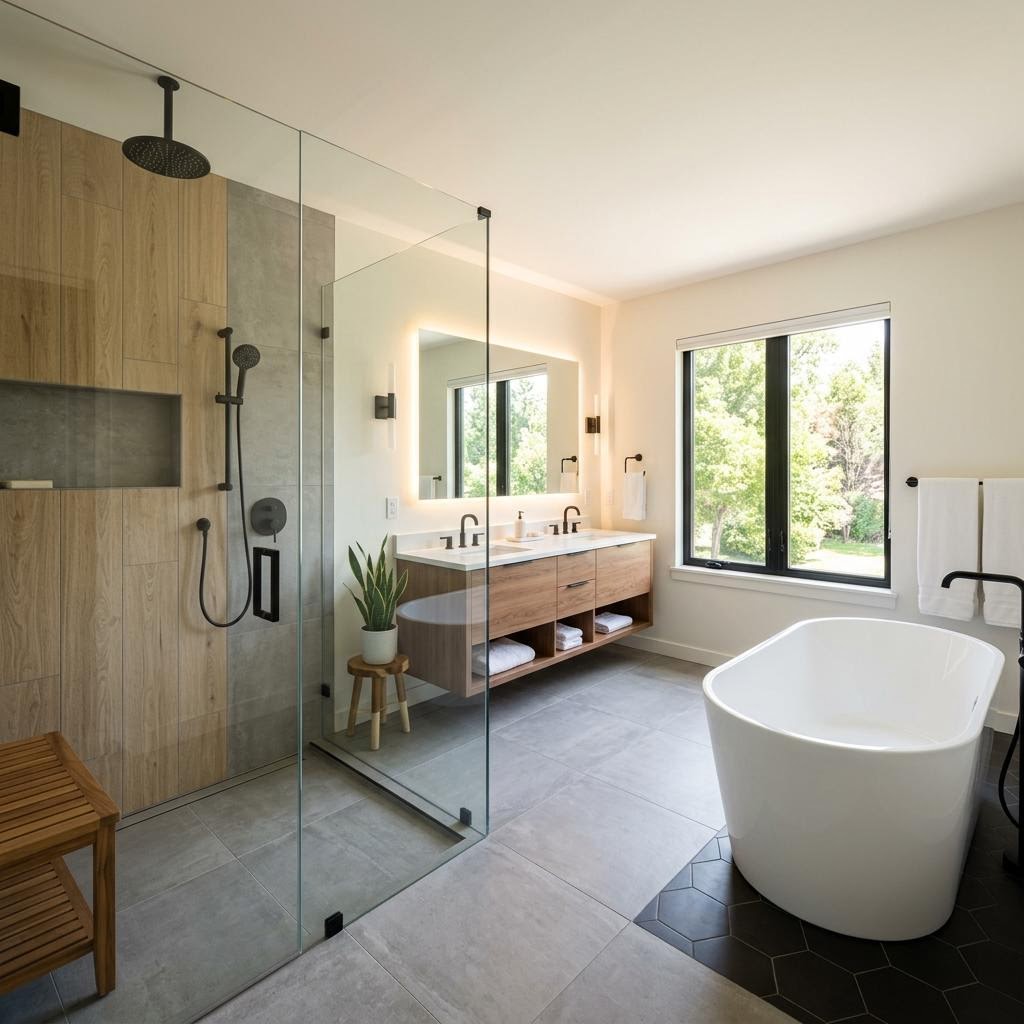
Choose outdoor tiles using exposure, traction, drainage and cleaning needs. Ask for product-specific suitability rather than relying on an indoor showroom sample.
An outdoor tile needs to suit the complete setting: weather, water, movement, cleaning and the surface underneath. A tile that looks good in an indoor display may not be appropriate for an exposed path or alfresco area. Start with the location and use, then have a tiler assess the product and installation system together. Appearance is only one part of the decision.
Describe the actual exposure
Say whether the area is covered, open to rain, shaded, near a pool or used as an entry route. Include furniture, pets and how people move through it. Wet conditions and bare feet may change the relevant questions. Ask the supplier for the tile’s intended-use information and supporting test documentation where relevant. Do not treat a broad “outdoor” label as approval for every wet or sloping location.
Consider traction and cleaning together
Surface texture affects both feel and maintenance. Ask how the actual product should be cleaned and whether the finish suits the expected dirt, leaf material and water exposure. A very textured sample may need a different routine from a smooth one. No surface description is a guarantee against slipping in all conditions. Discuss the whole area, including transitions and drainage, rather than choosing solely from one laboratory rating or marketing term.
Assess drainage and the base
The tiler should consider falls, existing movement, water paths and the condition of the substrate. Tiling over a drainage problem can leave the underlying issue unresolved. Ask whether waterproofing, drainage or other building work is required before installation. The cited large-format bulletin supports questions about substrate compatibility for its product scope; it does not establish a universal outdoor system. Do not adjust levels or remove unknown materials yourself.
Plan joints, edges and transitions
Discuss where the tiled area meets doorways, garden beds, steps and retained surfaces. Ask how movement provisions and exposed edges are handled. Existing joints should not be casually hidden beneath a new layout. Clarify who assesses any trip or access concerns and whether approvals are required for the proposed work. A material change can affect more than colour, especially where finished levels or adjoining drainage paths change.
Compare the installed system
Request the tile, preparation, bonding and joint system, included area and exclusions in the quote. Confirm access, waste removal and return-to-use guidance. Keep product care details and any advised spares. A useful outdoor selection matches the documented product to the site and maintenance routine; it does not promise that a particular finish eliminates every weather, water or slipping risk.
For a property-specific discussion, contact our outdoor & alfresco tiling team with the details you have gathered.